10 Must Haves for Breastfeeding and Pumping
Updated: Sep 9

This post contains links to products available for purchase on Amazon.com, I do not make any commision from these products at this time.
Breastfeeding and pumping can take over your kitchen counter, your fridge, your laundry basket, and somehow your entire brain. The right supplies do not make it effortless, but they can make the daily rhythm feel much more manageable.
After two breastfeeding journeys, I learned that the best products are not always the cutest or most expensive. They are the things that save time, maximize organization, and let you enjoy bonding with your baby.
This list focuses on the practical items that actually earn their space in your home. Some are for cleaning pump parts and bottles. Some help with milk storage. Some make the physical side of nursing and pumping more comfortable. All of them can make a real difference.
This post is for general information only and is not medical advice. For supply concerns, latch pain, pumping output, or feeding plans, it is always best to reach out to an IBCLC, pediatrician, or trusted healthcare provider.

Start with the supplies that keep everything clean
When you are pumping often, cleaning becomes part of the routine fast. Bottles, flanges, duckbill valves, backflow protectors, storage containers, and nipples all pile up. Having the right cleaning tools makes the process less frustrating and helps keep parts ready when you need them.
1. Bottle brushes that reach every little spot
A good set of bottle brushes is one of those basic items you will use constantly. Look for a set with a full-size brush for bottles, a smaller brush for nipples, and a tiny detail brush for pump parts.
Pump parts have small curves and edges where milk can sit if they are not cleaned well. A detail brush helps clean around valves, connectors, and narrow openings without having to fight with a sponge that does not fit.
A few practical tips:
Keep your pump-part brushes separate from regular dish brushes.
Let brushes air dry fully between uses and store upright
Replace them when the bristles start to bend, smell, or look worn.
If bottle brushes are part of your everyday setup, cleaning feels less like a whole production and more like a quick reset.

This is the bottle brush set I have used with both of my babies. The brushes store vertically to allow water to drip into the collection cup, they have replacement brushes after one wears down, and as an added plus they store in a cute cup on your counter or under the sink.
Here is the Amazon link for this product: https://a.co/d/09CTZPlx
2. A non-toxic soap for handwashing parts
For handwashing bottles and pump parts, a gentle, non-toxic dish soap is a must. Since these items touch milk and go into your baby’s mouth, many parents prefer a soap that is fragrance-free, dye-free, and made without harsh ingredients.
The soap still needs to clean well. Milk fat can cling to plastic and silicone, so you want something that cuts residue without leaving behind a strong scent.
A dedicated wash basin can also help if you have the space. It keeps baby feeding items away from food scraps in the sink and makes it easier to wash everything in one batch.
There isn't a brand that I swear by but anything frangrance free, or labeled as "Free & Clear" is a soap I would use on pump parts and bottles. It is a good rule of thumb to swith your household to a non-toxic soap across the board.

Here is the Amazon link to this product: https://a.co/d/09GlxPHJ
3. Non-toxic dishwasher detergent for easier cleaning
A bulky sterilizer sounds helpful until it takes over the counter. For me, putting dishwasher-safe parts through the dishwasher was much easier than adding another machine to the kitchen.
When I was not using my pumps, I would store them in the fridge so that I did not have to do an entire cleaning cycle everytime I pumped, this saved me so much time and let me focus more on loving my breastfeeding journey. I would make a note in my phone or put a sticky note on the fridge to mark 24 hours. Usually, I was running my dishwasher once a day anyways, so I would clean my pump parts and run the dishwasher. If your washer has a sterilize, high heat, and heat dry setting, select these to make sure you get a thorough sterlization during each wash.
If you are worried about bacteria, boiling parts for 10 minutes is the best proven way to completely sterilize all pump parts!
A non-toxic dishwasher detergent is helpful if you plan to wash bottles, pump parts, and pitcher pieces in the dishwasher. Look for one that works well with your machine and does not leave a strong smell on silicone or plastic.
Before tossing everything in, check your pump manual. Some parts may be top-rack only, and some tiny pieces can warp or get lost if they are not secured. A dishwasher basket is great for small items like nipples, valves, and caps.
A collapsible wash basin like this can keep your pump and bottle parts separate from other dirty dishes in the sink. When its not in use, it folds down for easy storage under the sink.

Here is the Amazon link for this product: https://a.co/d/0bFLWpVG

Here is the Amazon link for this product: https://a.co/d/0dVJ2jVJ
The goal is not perfection. The goal is having a cleaning routine you can actually keep up with.

Set up milk storage before your freezer fills up
Milk storage seems simple until you have bags sliding around the freezer, dates facing the wrong direction, and no idea which milk should be used first. A small amount of organization up front can prevent a lot of stress later.
4. A freezer bin for breastmilk storage
A freezer bin is one of the most underrated breastfeeding and pumping items. It keeps frozen milk bags upright, contained, and easy to rotate.
Without a bin, bags tend to scatter. They can freeze in odd shapes, get buried under other food, or become hard to organize by date. A clear plastic bin lets you line them up and see what you have. Mark the date, milk amount, and time pumped on your bags BEFORE you add milk.
A simple system works best:
Freeze bags flat first.
Once frozen, stand them upright in the bin.
Place the oldest milk in front.
Add newer bags to the back.
This makes it easier to use milk in order and avoid finding an old bag months later under a bag of frozen peas.
Here is an example of storage bins designed for breastmilk

Here is the Amazon link for this product: https://a.co/d/09nQyXZ8

You can also use a tool like this to freeze your bags flat first to maximize freezer space.
Here is the Amazon link for this product: https://a.co/d/0bpeRDMU
5. Breastmilk bags you trust
Breastmilk bags need to do a few things well. They should seal securely, freeze flat, be easy to label, and pour without making a mess. My favorite brand has been Lansinoh. They freeze nicely, store well, and are easy to find in most stores.
No matter which brand you choose, check the seal before freezing. It is also smart to avoid overfilling bags, since milk expands as it freezes. I have found 6 ounces is the max I fill my bags with to get a good milk brick once completely frozen. Laying bags flat on a small tray until solid helps them stack better later.
Label each bag before filling it. Once milk is inside, writing on the bag can get awkward. Include the date and amount. If your baby goes to daycare, you may also need to add a name.
NOTE: If you receive insurace covered milk storage bags, you may not get to choose which brand. If extra spending is not possible in your budget, make the free bags work. There are also many individuals who give away their extra storage bags for free on Facebook Marketplace. However, if you like a certain brand like I do I have linked them below.

Here is the Amazon link for this product: https://a.co/d/0fKYki0S
6. A milk pitcher for fridge storage
A milk pitcher can make fridge storage much easier, especially if you pump more than once per day. I liked using the fridge pitcher method because it kept everything in one place and made bottle prep simpler.
With this method, pumped milk from the same day is chilled and combined in a clean pitcher, then portioned into bottles or bags later. This can cut down on the number of separate bottles in the fridge.
I used the Dr.Browns milk pitcher with each pregnancy.

Here is the Amazon link to this product: https://a.co/d/01o4X0bo
A sticky note on the pitcher helped me remember two key things:
When the pitcher was washed
When the milk in the pitcher was started
That little note saved so much mental energy. When you are tired, tiny systems matter.
Make sure to follow current milk storage guidance from trusted health sources and your care team, especially if your baby was born premature, has medical needs, or requires special feeding instructions.

Choose gear that makes feeding more comfortable
Comfort matters. Feeding sessions can be long, and pumping can happen many times a day. Supportive gear helps protect your back, shoulders, wrists, and patience.
7. An insurance-covered breast pump
A good breast pump can be expensive, so always check what your insurance covers before buying one out of pocket. Many insurance plans in the U.S. cover a breast pump, though the options and rules vary.
After two breastfeeding journeys, my favorite has been the Spectra wall pump. It is strong, dependable, and works well as a main pump for regular use. A wall pump is not as portable as a wearable pump, but for me, it was worth it because it did the job well.
While on a 3 day road trip with my husband and two kids, a full charge on the Spectra lasted for 6 20-30 minute pumping sessions (2 per day). The battery holds well and empties the most efficiently and comfortably in my personal experience.
I used the website Aeroflow Breastpumps website (www.aeroflowbreastpumps.com) for each of my pregnancies. I entered my information and the company reached out to my doctor for a prescription, sent the pump to my house, and would send me reminder texts to reorder parts with a simple "yes" response text.
When choosing a pump, think about your real life:
Will you mostly pump at home?
Do you need to pump at work?
Do you want battery power?
Are replacement parts easy to buy?
Can you adjust suction and cycle settings?
The “best” pump is the one that fits your routine and helps you remove milk comfortably. Flange fit also matters a lot, so do not ignore sizing. A poor fit can affect comfort and output.
I highly advise looking into your insurance coverage for breastpumps before buying one outright, but I have linked the one I like right here.

Here is the Amazon link to this product: https://a.co/d/02AbaguT
8. A comfortable breastfeeding pillow
A supportive breastfeeding pillow can make nursing sessions feel so much better. Newborn feeds can be long, and holding a baby in position without support can quickly lead to neck, shoulder, and back strain.
I liked the My Brest Friend pillow because it felt sturdy and supportive. It helped bring baby up to the right height instead of making me hunch forward. That one change can make a big difference during cluster feeding or middle-of-the-night nursing.

Here is the Amazon link for this product: https://a.co/d/03SZCAmk
A good breastfeeding pillow should:
Stay secure around your body
Lift baby high enough for a comfortable latch
Support your arms and wrists
Feel firm enough that baby does not sink too low
Have a cover that is easy to wash
You can use regular pillows, too, but a structured nursing pillow often stays in place better.
9. A supportive breastfeeding and pumping bra
A supportive bra that works for both nursing and pumping is absolutely worth it. You do not want to change bras every time you switch from feeding baby to pumping.
Look for a bra that has nursing access and can also hold pump flanges securely. Hands-free pumping is a huge help. It lets you drink water, adjust settings, massage if needed, or just sit without holding bottles the entire time.
Comfort is key here. A bra that digs, compresses too much, or creates clogged areas is not worth it. Soft fabric, adjustable straps, and enough stretch can make it more wearable throughout the day.
It helps to have more than one. Milk leaks, spit-up happens, and laundry may not happen as often as you think it will.
I will attach bras that I have personally tried for your consideration.
I purchased these specific bras on Amazon with each of my pregnancies. I wore them around the clock. I liked that they come in a 3 pack for the price of a lot of other name brand bras.

Here is the Amazon link for this product: https://a.co/d/0ckVF5FU
However, these bras do leave visible lines on tighter shirts, so I would were these bras when I was leaving the house to go see friends, go to church, or go somewhere I still wanted to be able to nurse but didnt want to look like I was wearing a nursing bra.
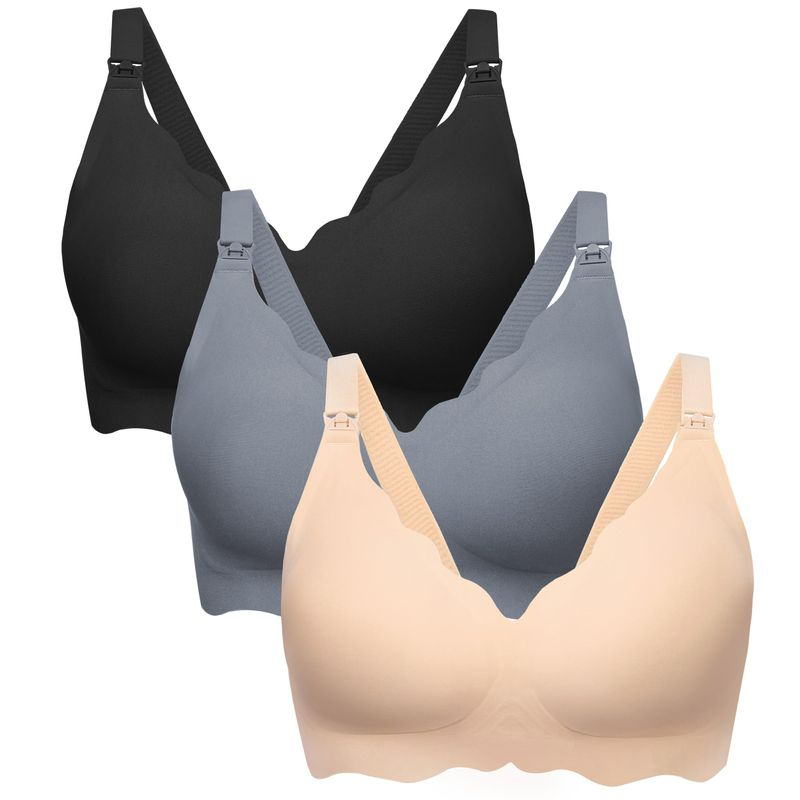
Here is the Amazon link for this product: https://a.co/d/0aUtKE0J
Use simple tracking tools to lighten the mental load
The feeding stage comes with a lot to remember. When did baby eat? Which side was last? How many ounces did you pump? How many wet diapers were there today? Tracking can help, especially in the early weeks.
10. The Huckleberry app for feeding and diaper tracking
The Huckleberry app is a helpful tool for tracking feeding times, wet diapers, ounces pumped, sleep, and more. In the newborn stage, that information can be especially useful during pediatrician visits or when you are trying to understand baby’s patterns.
The Huckleberry app has helpful widgets that can remind you to log diapers and feeding and stay on your homescreen for ease of use.

You do not have to track forever. Some parents love tracking long term, and some stop once feeding feels more predictable. Both are fine.
The best part of an app is that it takes information out of your tired brain and puts it somewhere easy to check. When days and nights blur together, seeing the last feeding time or diaper count can be reassuring.
A few helpful things to track early on:
Nursing start times
Which side baby fed on
Bottle amounts
Pumping sessions and ounces
Wet and dirty diapers
Sleep stretches
If tracking starts to feel stressful, simplify it. Use the app in a way that supports you, not as something else to worry about.
A simple setup can make the whole routine easier
Breastfeeding and pumping come with a learning curve. There are parts to wash, milk bags to label, bottles to prep, bras to rotate, and feeding times to remember. Having the right tools nearby can make the process feel less scattered.
The 10 must haves for breastfeeding and pumping every mom needs are not about buying everything on the baby registry. They are about choosing items that solve real daily problems.
Here is the short version:
Bottle brushes for thorough cleaning
Non-toxic soap for handwashing bottles and parts
Non-toxic dishwasher detergent for easier cleanup
A freezer bin and dedicated shelf for organized milk storage
Breastmilk bags, with Lansinoh as a favorite
An insurance-covered breast pump, like the Spectra wall pump
A milk pitcher for the fridge pitcher method
A comfortable breastfeeding pillow, like My Brest Friend
The Huckleberry app for tracking feeds, diapers, and pumping
10. A supportive bra that works for nursing and pumping
Start with the items that match your routine right now. If you are mainly nursing, focus on comfort and tracking. If you are pumping often, prioritize cleaning, storage, and a strong pump. If you are doing both, build a setup that keeps the daily tasks as simple as possible.
Tiny systems make a big difference. A labeled freezer bin, a sticky note on the milk pitcher, a bra that holds pump parts, and a pillow that saves your back can turn a stressful routine into one that feels much more doable.
With Love,
Hannah


Comments