5 Baby Road Trip Essentials I’d Never Travel Without
Updated: Sep 10
A road trip with a baby can feel peaceful for ten minutes, then suddenly turn into a full backseat emergency over sun glare, boredom, a rubbing strap, or a nap that never happens. The good news is that small, simple products can make a big difference.
The goal is not to pack the car with every baby item you own. It is to choose a few road trip helpers that keep your baby more comfortable while keeping safety first. These five picks are practical, easy to use, and worth having within reach before you pull out of the driveway.

A soft car seat mobile can help keep your baby engaged
A car seat mobile gives your baby something gentle to look at during the drive. For younger babies, the movement, shapes, and soft textures can help fill those stretches when they are awake but not ready to nap.
Look for a mobile made for car seats or strollers, not a nursery crib mobile. It should be soft, lightweight, and securely attached. Avoid anything hard, heavy, or long enough to swing into your baby’s face.
A good car seat mobile should:
Attach firmly to the car seat handle only if your car seat manual allows it
Stay out of the harness path
Have soft toys with no loose pieces
Be easy to remove when loading or unloading the car seat
The safest rule is simple. If the mobile changes how the car seat works, blocks your view of the baby, or could become a projectile during a sudden stop, skip it.
For longer drives, rotate the mobile with other safe visual items during rest stops. Babies get bored, too, and a “new” view can buy a little extra calm time.
High contrast images are great for rear-facing babies
High contrast cards or images are one of the easiest baby road trip products to pack. Black-and-white patterns, bold shapes, and simple faces are especially interesting to young babies whose vision is still developing.
For a rear-facing baby, place the images where the child can see them, such as on the back seat facing the car seat. The key is to attach them safely. Use soft cards, a fabric panel, or a baby-safe mirror product that includes high contrast images and is designed for car use.
Avoid taping loose paper to the seat, clipping hard items near the baby, or using anything that could fall into the car seat.
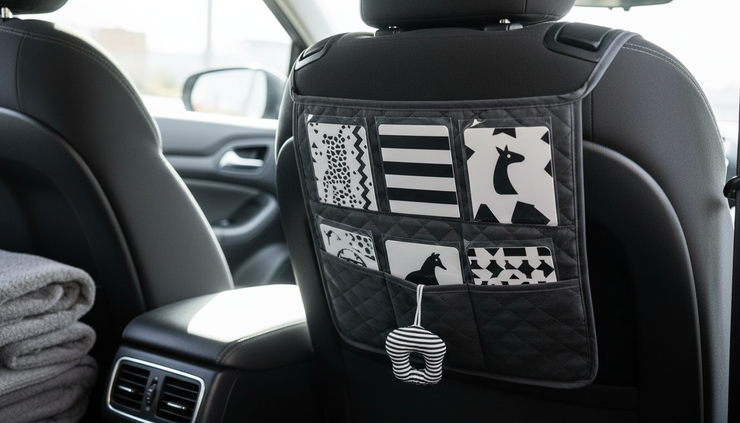
Try these simple image ideas:
Black-and-white circles
Large checkerboard patterns
Simple animal faces
Bold stars or stripes
Red, black, and white shapes for older infants
High contrast images are quiet, battery-free, and easy to swap out. That makes them a smart choice when you want stimulation without adding noise to the car.
A window shade screen helps reduce bright sun and glare
Sunlight can be a major reason babies fuss in the car. Even with tinted windows, sun reflection can hit a baby’s face at the wrong angle, especially during morning or late afternoon drives.
A shade screen for the window helps soften direct light and reduce glare. It can make the back seat feel more comfortable without blocking airflow or making the car too dark.
When choosing a window shade, look for one that:
Fits the window well
Does not block the driver’s view
Stays secure while driving
Can be adjusted as the sun moves
Is easy to remove or reposition
Static-cling shades are often simple and low-profile. Roller shades can work, too, if they attach securely and do not rattle. Skip anything bulky or poorly secured.
A shade does not replace normal sun protection outside the car, but it can make a big difference on the road. It is one of those small items you will be glad you packed when the sun suddenly shifts onto your baby’s face.
Approved strap covers can prevent rubbing near the neck
Car seat straps are supposed to fit snugly. A loose harness is unsafe. Still, some babies get irritated when straps rub near the neck or face, especially during a long ride.
This is where strap covers can help, but there is an important safety note. Use only car seat strap covers that came with your car seat or are approved by the car seat manufacturer. Aftermarket strap pads may look comfortable, but bulky or untested products can affect harness fit.
The harness should always lie flat and snug against your baby. You should not be able to pinch extra webbing at the shoulder. Chest clips should sit at armpit level.

To reduce rubbing safely:
Check the harness height and tightness before each drive
Make sure clothing is not bunching under the straps
Use thin, approved strap covers only
Avoid puffy coats or thick layers in the car seat
Read the car seat manual before adding accessories
If your baby’s neck looks red after car rides, the first step is to check harness position. Sometimes a small adjustment fixes the issue without adding anything extra.
A travel sound machine can make naps more likely
A travel sound machine can be a lifesaver when road noise, sibling chatter, gas station stops, or unfamiliar surroundings make it hard for your baby to settle.
White noise, soft rain, or gentle shushing sounds can create a familiar sleep cue. If your baby already uses a sound machine at home, a travel version can help the car feel less different.
Choose a sound machine that is:
Small and easy to pack
Rechargeable or battery-powered
Simple to turn on from the front seat when parked
Able to attach safely away from the baby
Loud enough to hear, but not too loud
Place it away from your baby’s ears, such as clipped to a diaper bag on the floor or tucked into a seat pocket if it stays secure. Keep the volume low enough that it blends into the background.
A sound machine will not guarantee a nap, but it can help build a calming routine. Pair it with a clean diaper, a fed baby, a comfortable temperature, and a planned drive during nap time when possible.

Pack for comfort, but keep safety first
The best baby road trip setup is simple. Give your baby something calm to watch, protect them from harsh sunlight, reduce rubbing from approved harness pieces, and create a familiar sleep environment.
Before every trip, do a quick safety check:
The car seat is installed correctly
The harness is snug and flat
Accessories are soft and secure
Nothing loose or heavy sits near the baby
The driver’s view stays clear
Road trips with babies rarely go perfectly. Plan for breaks, expect a few stops, and keep the most useful items easy to reach. With the right mix of comfort and safety, the ride can feel calmer for the baby and a lot less stressful for everyone else in the car.


Comments